How did your background in Human Resources influence your artistic practice?
Humans have always had an influence on my work: they make me happy, make me think, laugh, worry, upset, frustrate me, disappoint me. In Modern Times I talked about the daily issues in a working environment: communication issues, gender topics, personality and behavior during the recruitment process and later in the working process, abuse of power by people in management positions, mobbing, burnout, ongoing restructurings and, with that, the hiring and firing of employees. There should be teamwork but there is a lot of competition. It’s all about people issues and how we deal with them.
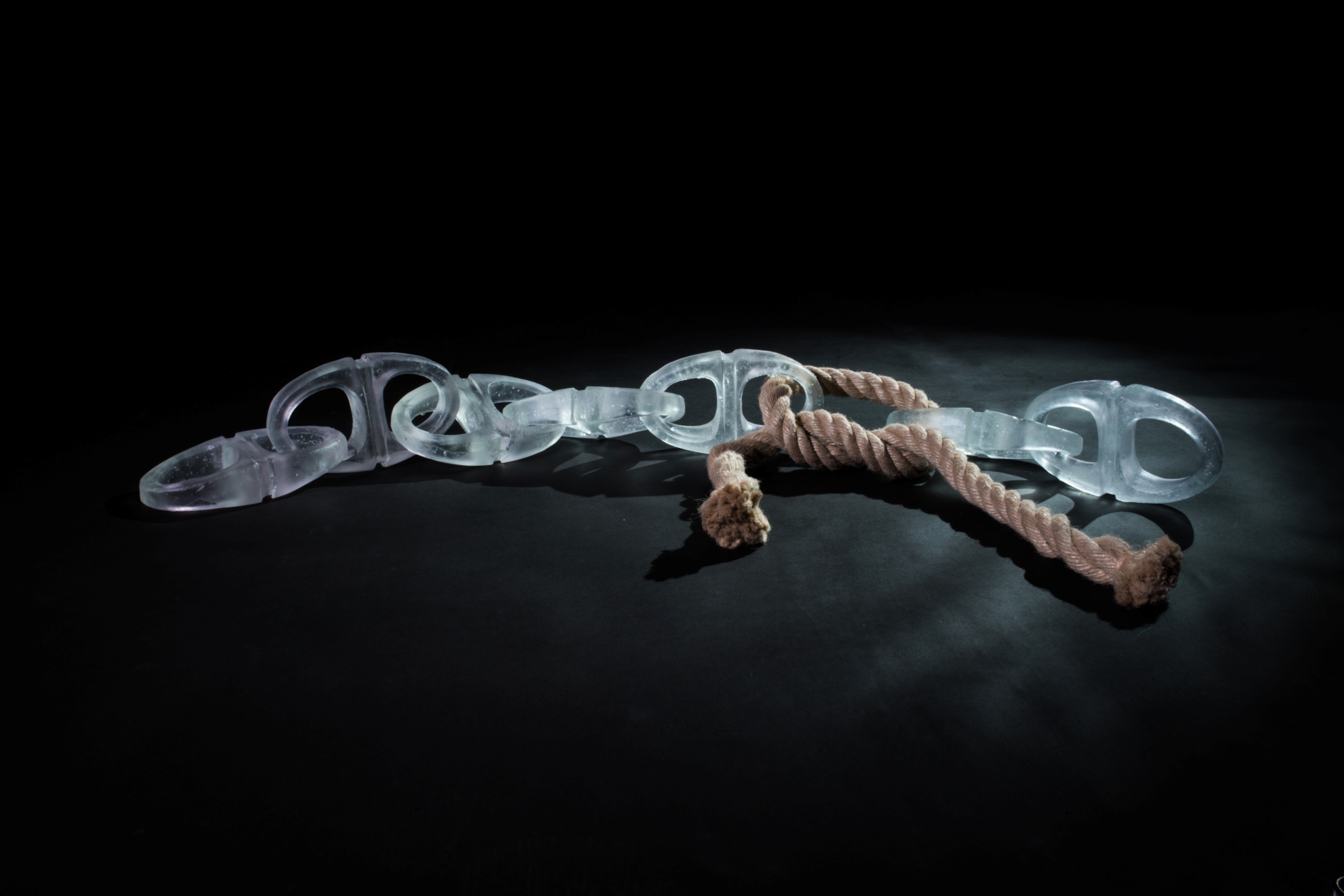
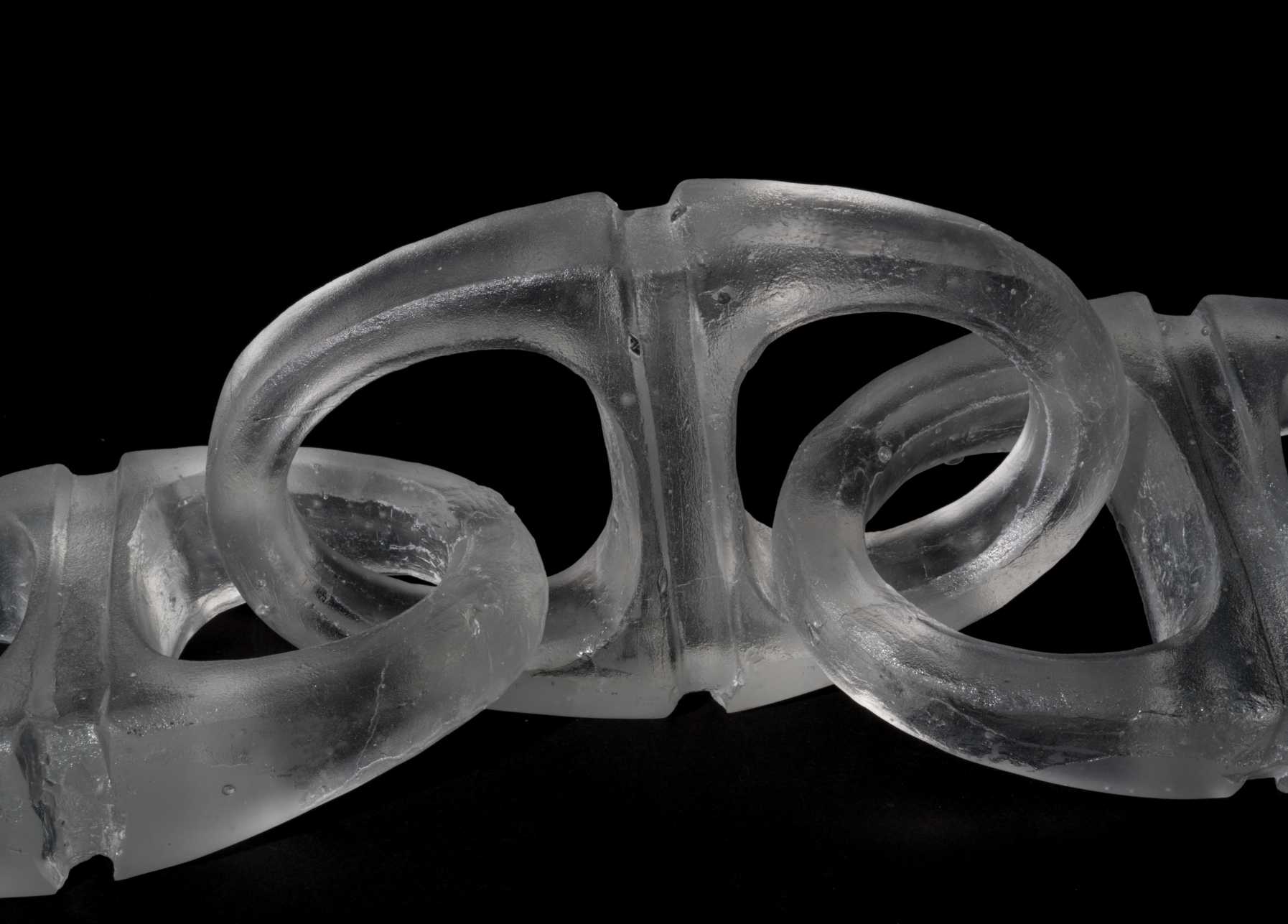
Let’s take one piece, “Connections“. If you have good relations with the management, you get promoted faster, you get a higher salary increase, you get a development path….
Meanwhile, I found out it is exactly the same in the art world as in business. If you have mentors and sponsors like your art professor, curators, museum directors, art historians, gallery owners… without these connections in the art world, the artist is lost; there are too many around. If you get attention it does not mean your work is better than others’ – this happens mostly by chance.
In terms of working, I was trained in business, so I take the project management approach: developing an idea, doing research about it, defining the message and finding an expression and meaning for each work. My work should tell a story that has an impact, that makes people think. I try to give it some structure, define main steps and, most important, finish a project. In business you have to; there is no question of whether you like it or not, it is your job.
What advantages and/or challenges do you see in becoming an artist at a later point in life?
You have developed your personality, stamina, you have a certain work approach, and already a learning curve in life with success and disappointment. For me, working in glass, I was able to finance my education and installing my studio, which is very expensive in terms of material, equipment, energy. Now I am covered from the financial point of view due to my former income. A disadvantage: very few support from institutions, foundations, residencies, galleries… Nobody wants to invest in old people; it takes a lot of time and resilience to develop a career in art business.
Last time we met, you mentioned you feel some reluctance from the art community to accept glass as a contemporary art medium, as it is usually perceived as something very traditional. How do you overcome this obstacle?
I try to get attention in the “normal” art world with my membership in Swiss Society of Female Artists – SGBK. I take conceptual art classes. I am now showing my material and approach in the Peer to Peer sessions. In Romania I had the chance to give a talk at the University of Art about glass and present my work. Last year (2022) I had the chance to show at the Regionale here in Basel, which was a big success for me. I was lucky that there was a young curator, Diogo Pinto, who took his job seriously and checked all 600+ applications. He didn’t care about age, formal education, gender, etc. I respect him a lot for that.
I learned that you need to have connections to get in there and that some of the curators don’t even check the applications since they have already made their choice. No chance for newcomers without connections. As I mentioned before… a learning curve.
In what ways do you feel the project Peer to Peer has contributed to your artistic practice?
The Peer to Peer project contributed to my artistic practice in that I experienced some new approaches in other materials (one artist) and in painting (three artists). I got in touch with other artists with another background in Basel, where I expect a strong art community. It was great to get attention for my work and material and to receive feedback and criticism; it is a bit lonely working as an artist in your own studio. I met great people who are willing to share, help and maybe work together in a project.
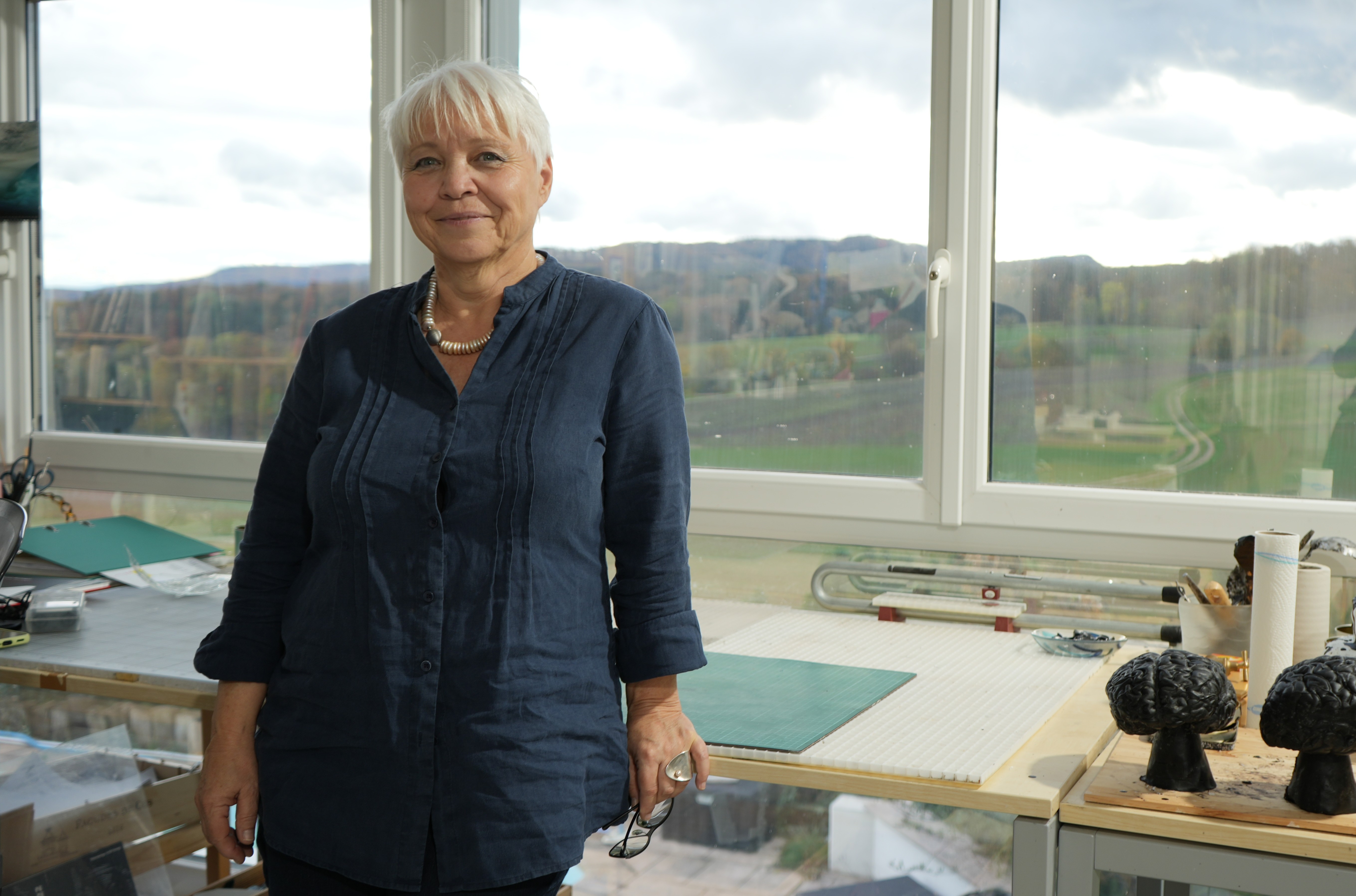
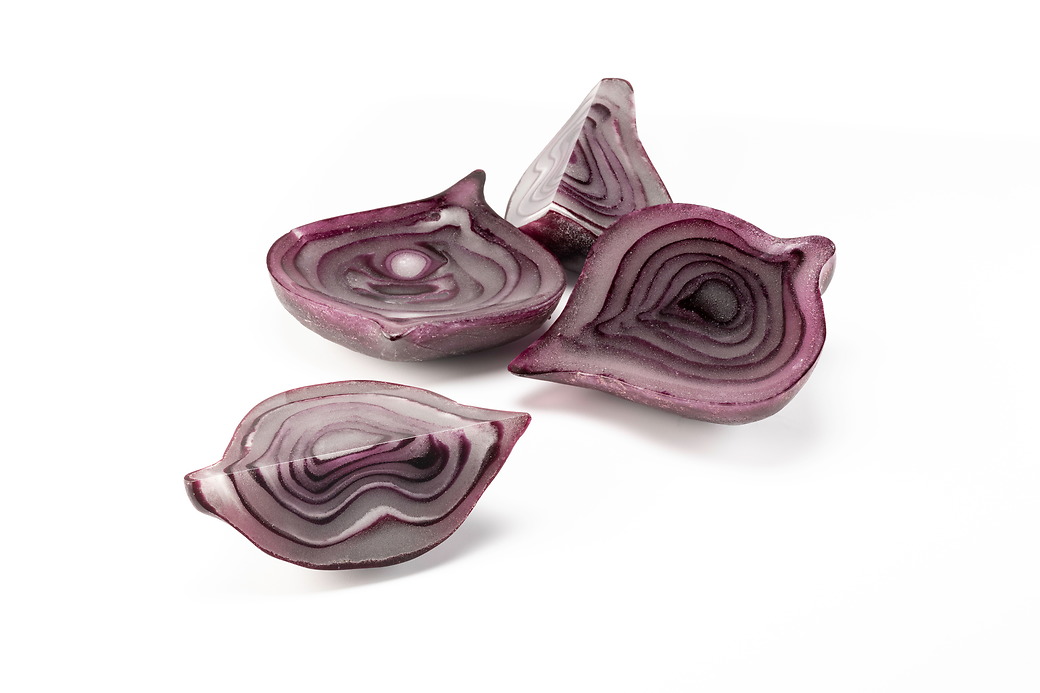
Karola Dischinger has been working with glass for 25 years. She was trained at various glass schools in the USA, Scotland and Germany. In recent years she has worked on several thematic projects, such as Modern Times , which refers to the world of work, and The Seven, which reflects on the influence of this number on our daily lives. At the time of this interview, she was working on The Last Tree, a project dealing with environmental pollution. Karola Dischinger likes to use metaphors, symbols and humor in her works and installations. Different levels of relationships and things which impact our society influence her work.